
 All products
 Special offers
 Customer favourites
 New products
 My order
 About us
 Branches informations
 News

Description
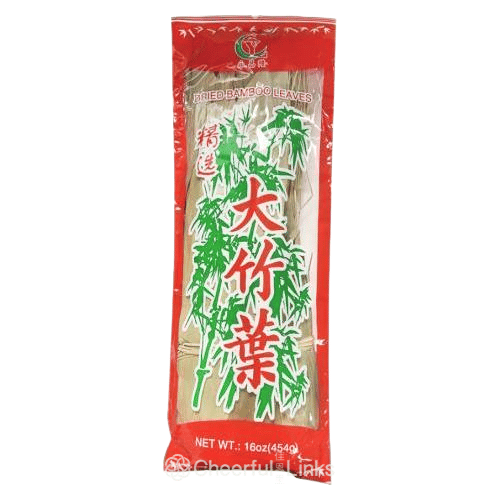
Dried bamboo leaves are a traditional ingredient primarily used for wrapping Zongzi (sticky rice dumplings). They provide a distinct, subtle, and earthy herbal aroma to the rice during the steaming or boiling process. These “large” size leaves are preferred for making bigger dumplings as they provide better coverage and structural integrity for the wrapping.
乾竹葉是製作粽子的必備材料。在蒸煮過程中,竹葉會散發出獨特的清香,滲入糯米中,賦予粽子經典的風味。大尺寸的竹葉適合包製較大、餡料較豐富的粽子,包起來更加方便且不易破裂。
Key Information
-
Net Weight: 454g
-
State: Dried.
-
Storage: Keep in a cool, dry place away from direct sunlight. Once opened, store in an airtight container or bag to prevent them from becoming brittle or picking up moisture.
How to Prepare (Crucial Step)
Dried leaves are brittle and must be rehydrated to become pliable:
-
Rinsing: Rinse the leaves thoroughly under cold running water to remove any surface dust or dried debris.
-
Soaking: Soak the leaves in a large basin of warm water for several hours or overnight until they are soft and flexible.
-
Boiling: For best results, place the soaked leaves in a large pot of boiling water and boil for 10–15 minutes. This ensures they are fully softened and sterilized, making them much easier to fold without tearing.
-
Final Clean: After boiling, wipe each leaf clean with a damp cloth or sponge before using.
Culinary Uses
-
Zongzi (Sticky Rice Dumplings): The primary use. The leaves act as a natural, aromatic “wrapper” for the rice and fillings.
-
Steaming Base: Can be used as a fragrant liner for steamers when cooking steamed buns, vegetables, or fish to impart a subtle bamboo scent.
-
Aromatic Broths: In some culinary traditions, a small piece of cleaned bamboo leaf is added to stocks for a faint, grassy fragrance.
Important Safety Notice
-
Safety: These are for culinary use only and are not meant to be eaten. Ensure you remove the bamboo leaf before consuming the contents of the dumpling.
Additional information
| Weight | 0.01 kg |
|---|---|
| location | C1 Ambient |
Reviews (0)
Be the first to review “Dried Bamboo Leaf 454g 竹叶 – 大”
Related products


Reviews
There are no reviews yet.